Malaysia country guide
Malaysia Food Safety Regulations for Food Businesses
Malaysia has a national food safety system governed principally by the Food Act 1983 and its subsidiary legislation. The rules apply to food business operators at all stages, including manufacturers, processors, restaurants, caterers, retailers, wholesalers, importers and exporters. This page summarises the main legal duties, the authorities involved and where to find official information.
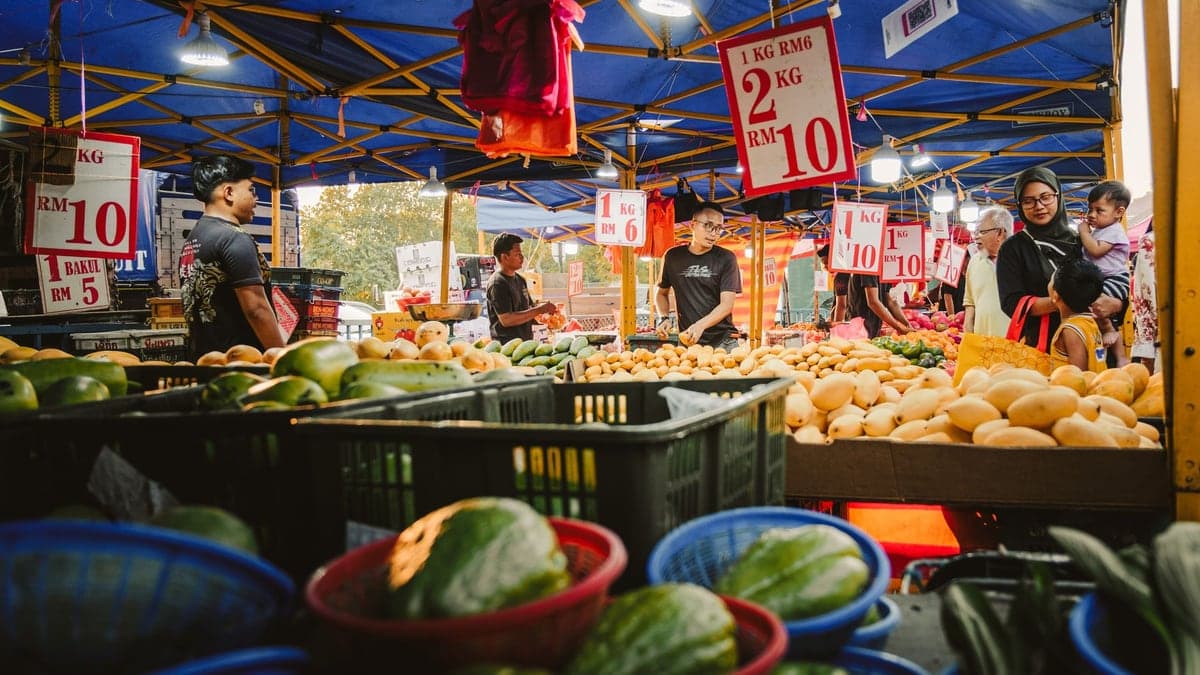
Photo by Ihsan Adityawarman on Pexels.
1. Regulatory framework
The principal national legislation is:
- Food Act 1983 (Act 281) — the main law on food safety and quality, including the legal basis for controlling imported food.
- Food Regulations 1985 — detailed rules on food standards, labelling, additives, contaminants, packaging and other matters that also apply to imported food.
- Food Hygiene Regulations 2009 — hygiene and food premises requirements.
Cross-border controls also depend on product-specific quarantine, veterinary, plant-health, fisheries and customs legislation. Malaysia does not have a single general instrument called the “Food Import and Export Regulations”; businesses must identify the rules that apply to their commodity and trade route.
Malaysia may also apply mandatory standards, guidelines and directives issued by the Ministry of Health and other competent authorities. Some requirements are sector-specific or depend on whether the food is domestically produced, imported or exported.
3. Main duties of food business operators
Under the Food Act 1983 and its regulations, food business operators are legally responsible for ensuring that food is safe and compliant. Main duties include:
- Safety: food must not be sold, imported, exported or offered for sale if it is unsafe or fails to meet applicable food law.
- Responsibility: the operator is responsible for compliance at all stages under its control.
- Traceability: operators must keep records that allow food to be traced through the supply chain where required.
- Withdrawal and recall: unsafe or non-compliant food must be removed from sale, recalled where necessary and reported to the relevant authority.
- Cooperation with authorities: operators must cooperate with inspectors, provide access to premises and records, and allow sampling.
- Own checks: operators must carry out appropriate checks to verify food safety and compliance.
4. Hygiene and HACCP
The Food Hygiene Regulations 2009 set hygiene requirements for food premises, equipment, maintenance, cleaning, waste, water supply, personal hygiene and training. Operators must maintain food premises in a hygienic condition.
Operators must establish and maintain food safety and traceability arrangements appropriate to their activities. For many food manufacturing and higher-risk operations, this will involve a documented food safety system based on HACCP principles. HACCP may also be required for certain product categories, official schemes or customer requirements.
Documentation should be proportionate to the size and nature of the business. Legal responsibility remains with the food business operator.
5. Registration and premises requirements
Food premises in Malaysia must generally be registered with the Ministry of Health under the Food Hygiene Regulations 2009 before starting operations. Registration is usually made through the state or district health office.
Operators may also need:
- a business licence or premises approval from the relevant local authority
- specific approvals for activities involving live animals, certain animal products or other regulated products
- registration with the relevant authority for import or export of certain food categories
Exact requirements depend on the business type, activity, product and location. Businesses should confirm them with the state or district health office and local authority.
6. Labelling and food information
The Food Regulations 1985 set labelling requirements for prepacked food sold in Malaysia. Key requirements generally include:
- appropriate food name and list of ingredients
- net quantity or weight
- date marking, such as expiry date or date of minimum durability
- country of origin
- name and address of the manufacturer, packer, distributor or importer
- nutrition and allergen information where required
- storage and usage instructions where appropriate
Under regulation 10 of the Food Regulations 1985, prescribed label particulars for food produced, prepared or packaged in Malaysia must be in Bahasa Malaysia. For imported food, those particulars may be in Bahasa Malaysia or English. Additional rules apply to specific categories, including food with nutrition or health claims, special-purpose food and irradiated food.
7. Imports into Malaysia
Food imported into Malaysia must comply with the Food Act 1983 and its regulations. Importers are legally responsible for the safety and compliance of imported food.
Depending on the product and origin, imported food may require:
- an import permit or approval from the Ministry of Health or another competent authority
- quarantine or veterinary permits for live animals, certain animal products, fish or plants through MAQIS or the Department of Veterinary Services
- health certificates or supporting documents from the exporting country
- inspection and sampling at the point of entry
- customs declaration and release after relevant controls
Importers should verify requirements before consigning goods. A foreign supplier’s certificate does not remove the importer’s responsibility under Malaysian law.
8. Exports from Malaysia
Export requirements depend on the destination country and product. Exporters must generally comply with Malaysian food law and the importing country’s requirements.
Official export certificates, health certificates and similar documents are issued only by competent authorities. Depending on the product, this may be the Ministry of Health, Department of Veterinary Services, MAQIS or another authorised body.
Private consultants, certification bodies and directory services cannot issue official export certificates or government approvals. A private directory listing is not official verification or approval.
9. Product-specific requirements
- Contaminants, additives and food standards: maximum limits and permitted substances under the Food Regulations 1985
- Microbiological criteria: applicable national standards or regulatory requirements
- Food contact materials and packaging: relevant provisions under the Food Regulations 1985 and other national rules
- Nutrition and health claims: specific requirements under the Food Regulations 1985 and applicable guidance
- Novel foods, genetically modified food and special-purpose food: additional requirements or approvals may apply
- Organic food: national organic certification rules may apply
Requirements vary by product, origin, destination, processing activity and business type.
10. Practical points for food businesses
- Identify which Malaysian food laws and regulations apply to the specific product and activity.
- Register food premises with the Ministry of Health and obtain necessary local or sector-specific approvals before starting operations.
- Implement hygiene controls and proportionate food safety management arrangements.
- Review labelling and language requirements before placing food on the Malaysian market.
- For imports, check permits, quarantine, inspection and customs requirements early.
- For exports, confirm destination requirements and apply to the correct competent authority for official certificates.
- Treat private certification schemes as separate from legal compliance.
- Do not rely on private consultants or directory listings for official approvals, certification decisions or export certificates.