
Vietnam country guide
Vietnam Food Safety Regulations for Food Businesses
Vietnam’s food-safety system is based on the Law on Food Safety No. 55/2010/QH12, which took effect on 1 July 2011. A revised Food Safety Law is being developed to replace the 2010 law. This guide explains the current legal framework, competent authorities, operator duties, HACCP requirements, licensing, labelling, import and export controls, and practical compliance points for food businesses operating in or trading with Vietnam. Requirements vary by product, activity, business type, origin and destination.
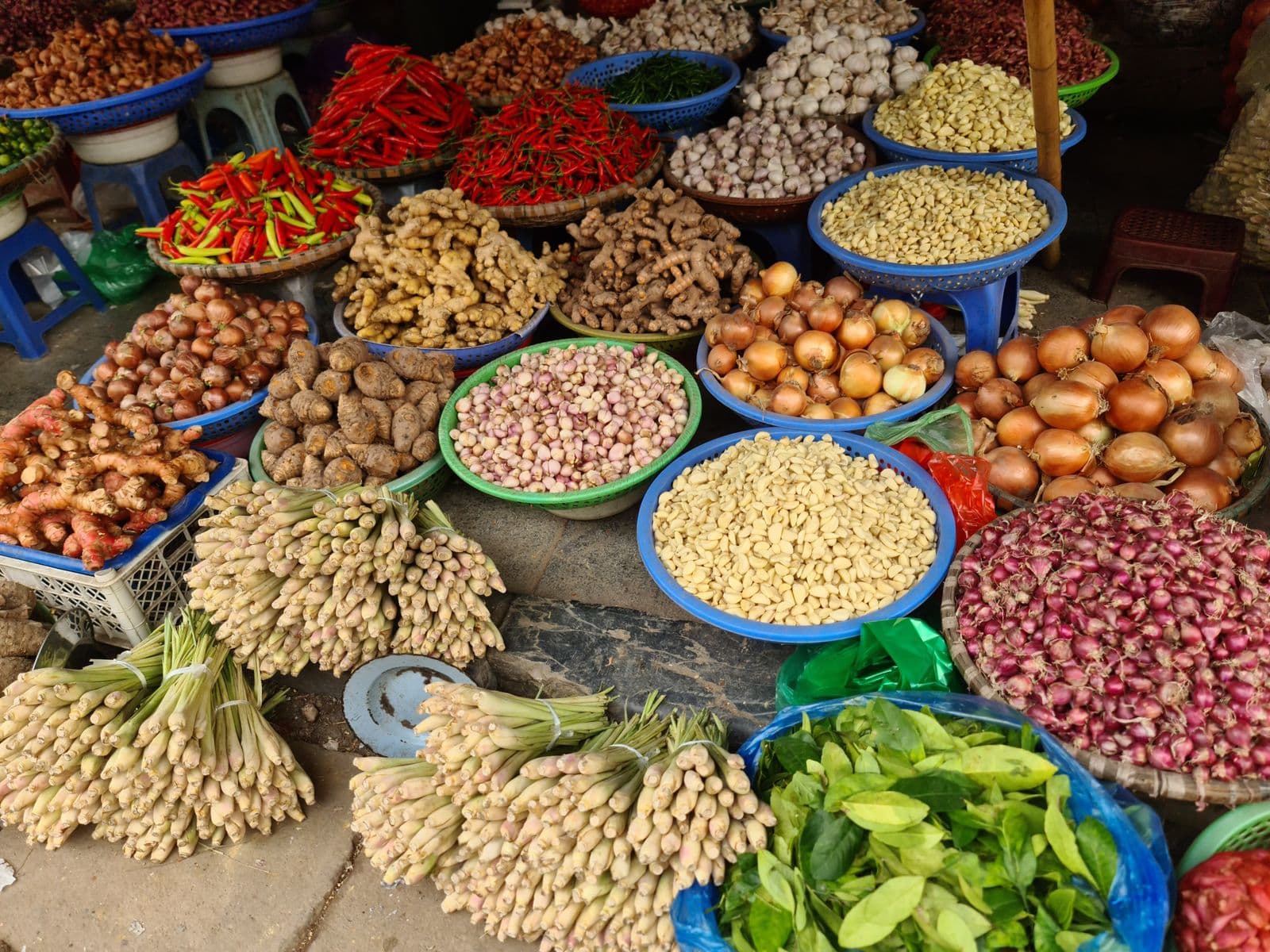
Photo by silvana spi on Pexels.
1. Regulatory framework
Vietnam’s food-safety legal framework is centred on the Law on Food Safety (Luật An toàn thực phẩm) and its implementing decrees and circulars.
Principal legislation:
- Law on Food Safety No. 55/2010/QH12 (Luật An toàn thực phẩm) — passed by the National Assembly on 17 June 2010 and effective from 1 July 2011. It regulates the rights and obligations of organisations and individuals, safe food production and trading, import and export, risk analysis, incident prevention and food-safety communication.
- Decree No. 15/2018/ND-CP (Nghị định số 15/2018/NĐ-CP) — dated 2 February 2018, detailing implementation of the Law on Food Safety. It replaced Decree 38/2012/ND-CP and introduced self-declaration of product safety for most foods.
- Decree No. 46/2026/ND-CP — dated 26 January 2026, providing measures for implementing the Law on Food Safety, including rules on labelling, genetically modified foods, advertising, traceability, laboratories and risk-based inspection of imported and exported foods.
Key implementing circulars:
- Circular No. 15/2024/TT-BYT — the list of foods, additives and food containers subject to state inspection of imported goods under Ministry of Health management.
- Circular No. 08/2025/TT-BYT — applications and procedures for certificates for exported foods under Ministry of Health management.
- Circular No. 17/2024/TT-BNNPTNT — amendments to food-safety certification rules for agro-forestry-fishery establishments, effective from 15 January 2025.
A revised Food Safety Law is being drafted to replace the 2010 law. The draft was notified to the WTO as G/SPS/N/VNM/171 on 30 July 2025. Businesses should monitor official developments and confirm the current consolidated text before relying on any draft provision.
3. Main duties of food business operators
Under the Law on Food Safety and implementing rules, operators have core responsibilities to:
- Maintain safety: food placed on the market must meet safety requirements and not harm human health.
- Maintain traceability: systems must identify the origin of food and food ingredients.
- Withdraw and recall: food that does not meet safety requirements must be withdrawn or recalled.
- Cooperate with authorities: operators must cooperate during inspections and enforcement actions.
- Complete product declarations: products must be self-declared or registered according to their category.
- Keep records: documentation must demonstrate compliance and support traceability, corrective action and official review.
4. Hygiene and HACCP
HACCP is not universally mandatory for every food business in Vietnam under current regulations. The legal framework references HACCP, ISO 22000, IFS and BRC as recognised food-safety management systems, while some categories have specific requirements.
Businesses that must apply HACCP or an equivalent system include:
- facilities producing medical nutritional foods, foods for special diets, food supplements and nutritional products for children up to 36 months;
- high-risk food producers where applicable under the developing amended framework; and
- food export businesses where HACCP or equivalent certification is required by the destination market or customer.
Small-scale food businesses and street-food vendors may be subject to simplified or less stringent requirements. Documented food-safety procedures remain necessary, with the level of documentation depending on the business type and product category.
The food business operator remains legally responsible for food safety and for implementing an appropriate management system. Businesses should monitor proposals to mandate GMP and HACCP for certain categories under the revised Food Safety Law.
5. Licensing, registration or notification
Food businesses in Vietnam are subject to a combination of registration, declaration and certification requirements.
- Business registration: businesses generally need an Enterprise Registration Certificate. Foreign-invested businesses may also need an Investment Registration Certificate.
- Certificate of Food Safety Eligibility: most food production and trading establishments must obtain a Giấy chứng nhận cơ sở đủ điều kiện an toàn thực phẩm from the competent authority. Applications typically include business registration, a description of facilities and equipment, and an on-site inspection.
- Exemptions: Article 12 of Decree 15/2018/ND-CP exempts certain establishments, including some small-scale facilities and businesses that only trade in pre-packaged foods.
- Self-declaration: approximately 90% of food products may use tự công bố, with the operator responsible for the accuracy of the declaration.
- Registered declaration: higher-risk products, including health supplements, foods for special dietary purposes and nutritional products for children up to 36 months, require đăng ký bản công bố.
The competent authority depends on the product category and may be the provincial Department of Health, Department of Agriculture or Department of Industry and Trade, the VFA or another designated authority. Fees vary by locality and product category; the fee for a Certificate of Food Safety is commonly stated as VND 2,500,000 per facility.
6. Labelling and food information
Food labelling is governed principally by Decree No. 43/2017/ND-CP on Goods Labelling, dated 14 April 2017, together with later implementing rules.
Mandatory information must be written in Vietnamese. Imported goods without sufficient Vietnamese information require a secondary label.
Food labels generally include:
- name of the goods;
- name and address of the responsible organisation or individual;
- origin of the goods;
- ingredients, including additives and preservatives;
- net quantity;
- production date and expiry date;
- storage conditions and instructions for use where relevant; and
- warning, health or nutrition information where applicable.
Dates are generally written in date-month-year format according to the solar calendar. Decree 46/2026/ND-CP provides specific rules for genetically modified foods, including labelling triggers based on the concentration of genetically modified ingredients.
7. Imports into Vietnam
Vietnam applies its own national import regime for food. Importers are responsible for ensuring that imported foods comply with Vietnamese requirements, including product declaration or registration.
Imported foods may be subject to state inspection depending on product category, risk classification and past compliance history. Importers should prepare:
- commercial documentation;
- a Certificate of Free Sale or Health Certificate from the exporting country where required;
- laboratory test results from an accredited or ISO 17025-accredited laboratory;
- the applicable self-declaration or registered declaration; and
- Vietnamese translations or secondary labels.
Circular No. 15/2024/TT-BYT lists products subject to state inspection under Ministry of Health management. Similar lists apply to products under MARD and MOIT management. Certain exemptions may apply under Decree 46/2026/ND-CP, including products covered by mutual recognition arrangements.
Food cannot be cleared through customs until applicable inspection is complete. Food of animal and plant origin may require certificates before shipment and may be subject to additional veterinary, phytosanitary or physical controls.
8. Exports from Vietnam
Exporters must ensure products meet the destination country’s requirements and obtain the necessary Vietnamese certificates.
- Ministry of Health products: Circular No. 08/2025/TT-BYT provides procedures for health certificates and other certificates for exported foods when requested by the importing country.
- Agricultural, forestry and aquatic products: certificates are issued through the competent agriculture authorities.
- Certificate of Free Sale: may be available for products under Ministry of Health management.
- Phytosanitary certificates: issued by plant-protection authorities for plant products.
- Veterinary certificates: issued by veterinary authorities for food of animal origin.
Private consultants, certification bodies and directories cannot issue official government export certificates or approvals.
9. Product-specific requirements
- Food additives: regulated under the Law on Food Safety and implementing rules and subject to state inspection on import.
- Pesticide residues and contaminants: controlled through applicable Ministry of Health limits and national technical regulations.
- Microbiological criteria: governed by relevant national technical regulations.
- Food-contact materials: may be subject to state inspection on import.
- Health-protective foods and dietary supplements: subject to registered product declaration and, for certain categories, HACCP or equivalent requirements.
- Foods for special dietary purposes: subject to registered declaration.
- Nutritional products for children up to 36 months: subject to stricter requirements, including HACCP or equivalent.
- Genetically modified foods: subject to specific labelling rules.
- Organic foods: regulated through national standards and certification requirements.
- Pre-packaged processed foods: generally subject to self-declaration.
10. Practical points for food businesses
- Identify the applicable legislation before starting any food activity; requirements vary by product, activity and whether goods are domestic or imported.
- Confirm whether the establishment requires a Certificate of Food Safety Eligibility and whether an exemption applies.
- Determine whether the product requires self-declaration or registered declaration.
- Review Decree 43/2017 labelling requirements carefully; mandatory information must be in Vietnamese and imported goods may need a secondary label.
- For imports, confirm state-inspection requirements early and arrange Certificates of Free Sale or Health Certificates where required.
- For exports, confirm destination requirements and obtain official certificates from the competent Vietnamese authority.
- Maintain traceability, withdrawal and recall systems.
- Monitor the revised Food Safety Law and any proposals for mandatory GMP or HACCP.
- Distinguish mandatory legal compliance from voluntary private certification. HACCP certification is not universally mandatory, although certain product categories and export businesses may require it.
