
Thailand country guide
Thailand Food Safety Regulations for Food Businesses
Thailand’s food safety system is based principally on the Food Act B.E. 2522 (1979) and regulations issued under that Act by the Ministry of Public Health. The rules apply to manufacturers, processors, restaurants, caterers, retailers, wholesalers, importers and exporters. This page summarises the main legal duties, the authorities involved and where to find official information.
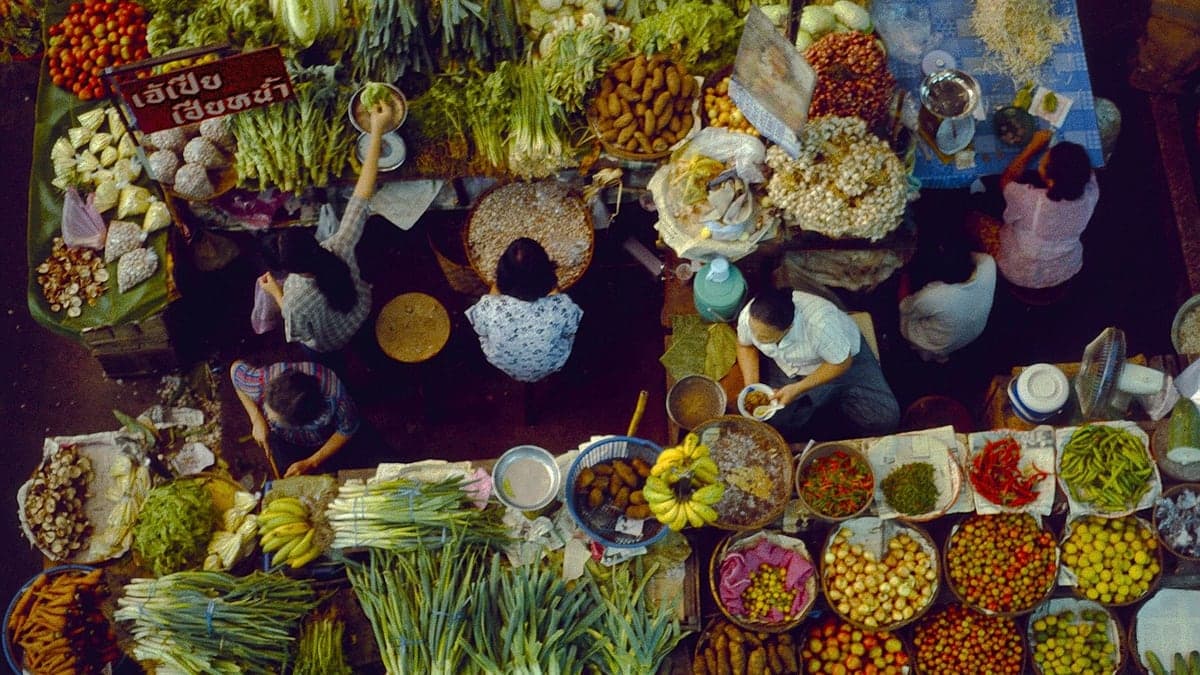
Photo by Jean Papillon on Pexels.
1. Regulatory framework
The principal national law is:
- Food Act B.E. 2522 (1979) / พระราชบัญญัติอาหาร พ.ศ. 2522 — the main law on food safety, food control, licensing, registration, standards, labelling and enforcement.
Supporting rules include:
- Ministerial regulations issued under the Food Act
- Notifications of the Ministry of Public Health on food standards, labelling, production methods, GMP and other matters
- Specific rules for primary products, animal products, fisheries products and certain processed foods, issued by other departments
The Food Act divides food into categories that determine the level of regulatory control. The main categories are generally:
- specifically controlled food — generally requires product registration before manufacture or import
- food for which standards are prescribed — generally requires product registration or notification and compliance with product standards
- food requiring label — generally subject to labelling requirements without product registration
- general food — subject to general food safety duties but without product registration
The exact requirement depends on the product, activity, business type, origin and destination.
3. Main duties of food business operators
The Food Act prohibits the manufacture, import for sale or sale of food that is impure, adulterated, substandard or otherwise prohibited under the Act. It also gives authorised officers powers to enter regulated premises, inspect records and take samples.
Operational duties depend on the applicable licence and notifications. They may include:
- Safety and conformity: meeting applicable composition, contaminant, additive and microbiological requirements
- Production controls: complying with mandatory production-process, equipment and storage requirements where they apply
- Records: keeping the records required by the applicable production, product or licence conditions
- Corrective action: stopping distribution and carrying out withdrawal, recall or authority notification where required by an applicable rule, licence condition or Thai FDA direction
- Inspections: permitting lawful inspection and sampling and producing required records
Thailand should not be assumed to impose the EU General Food Law model of traceability and recall in identical terms. Businesses must identify the Thai provisions that apply to their product and operation.
4. Hygiene, GMP and HACCP
Ministry of Public Health Notification No. 420, B.E. 2563 (2020), on food production processes, processing equipment or utensils and storage practices, establishes mandatory requirements for food-production operations within its scope. It includes general requirements and additional controls for specified production processes.
Notification No. 420 is commonly described as Thailand’s GMP framework, but it should not be paraphrased as making a standalone HACCP system mandatory for every manufacturer, restaurant or retailer. HACCP obligations may instead arise from product-specific controls, approval or certification schemes, export-market requirements or contracts.
Restaurants, caterers and retail food premises are also subject to sanitation and local licensing controls under public-health and local-authority legislation. Those controls are legally distinct from a Thai FDA food-production licence.
5. Licensing and product registration
Sections 14 and 15 of the Food Act establish licensing controls for producing food for sale and importing food for sale, subject to the Act and exemptions made under it. Depending on the activity, an operator may need:
- a food production licence / ใบอนุญาตผลิตอาหาร, or another form of premises authorisation applicable to the operation
- a food import licence / ใบอนุญาตนำเข้า for importing food for sale
- product registration, food-detail notification and a food serial number / เลขสารบบอาหาร, as required for the product category
Specifically controlled food is subject to product-registration controls. Foods for which quality or standards are prescribed and foods required to bear labels may follow a different notification route; they should not all be described as “registered” products. General food remains subject to the Food Act and applicable horizontal rules even when no product authorisation is required.
Restaurant and food-service premises permissions generally arise under public-health and local-authority rules rather than the Food Act licensing provisions alone. Operators should confirm both Thai FDA and local requirements before starting operations.
6. Labelling and food information
Prepacked food sold in Thailand must comply with the current Ministry of Public Health notification on labelling of prepackaged foods, including its effective date and transition provisions, together with any product-specific notification. Required particulars generally include:
- name of the food
- food serial number where required
- name and address of the producer, importer or other specified responsible business
- net contents
- ingredients, including allergen declarations where prescribed
- date marking and storage or use instructions where prescribed
- other product-specific warnings, nutrition information or statements
Required particulars generally must appear in Thai; other languages may also appear. The exact particulars, permitted presentation and whether a Thai supplementary label may be applied depend on the current general and product-specific notifications. Labels should be checked against the operative text before printing or import.
7. Imports into Thailand
Section 15 of the Food Act prohibits importing food for sale without a licence, subject to applicable exemptions. The Thai importer must also complete the product-authorisation route that applies to the food.
The import process may require:
- an import licence tied to the approved import premises
- product registration, food-detail notification or a food serial number, depending on classification
- Thai-language labelling that complies before retail sale
- health, origin or product documents required for the commodity
- Thai FDA or other agency inspection and sampling at the port of entry
- customs declaration and release after applicable food, animal, fisheries or plant controls
A foreign certificate or foreign-market approval does not by itself establish compliance with Thai law. Requirements should be confirmed before shipment.
8. Exports from Thailand
Export requirements depend on the destination country and product. Exporters must generally comply with Thai food law and the importing country’s requirements.
Official export certificates, certificates of free sale, health certificates and similar documents are issued only by competent authorities. Depending on the product, this may be Thai FDA, the Department of Livestock Development, the Department of Fisheries, the Department of Agriculture or another authorised public body.
Private consultants, certification bodies and directory services cannot issue official export certificates or government approvals. A private directory listing is not official verification or approval.
9. Product-specific requirements
Food businesses should check whether specific rules apply to their product or sector. Examples include:
- Food additives and processing aids: only permitted substances under Thai food standards may be used
- Contaminants, pesticide residues and veterinary residues: maximum levels under Thai standards
- Food contact materials: applicable Thai requirements
- Health foods, food supplements and food for special dietary use: registration or notification may apply
- Genetically modified food: safety assessment and labelling requirements may apply
- Organic food: national organic certification rules may apply
- Fishery products, meat and animal products: additional controls by relevant departments
Requirements vary by product, origin, destination, processing activity and business type.
10. Practical points for food businesses
- Identify which Thai food laws, standards and notifications apply to the specific product and activity.
- Obtain the correct food production or import licence and product registration before starting operations where required.
- Implement GMP and proportionate hygiene controls, including HACCP where required or appropriate.
- Review Thai labelling and language requirements before placing food on the Thai market.
- For imports, check food import licence, product registration, inspection and customs requirements early.
- For exports, confirm destination requirements and apply to the correct competent authority for official certificates.
- Treat private certification schemes as separate from legal compliance; they do not replace licensing or legal duties.
- Do not rely on private consultants or directory listings for official licences, registrations, certification decisions or export certificates.
