Spain country guide
Spain Food Safety Regulations for Food Businesses
Spain’s food safety system combines directly applicable EU food law with national Spanish legislation and regional enforcement. The rules apply to all food business operators, including manufacturers, processors, restaurants, caterers, retailers, wholesalers, importers and exporters. This page summarises the main legal duties, the authorities involved and where to find official information.
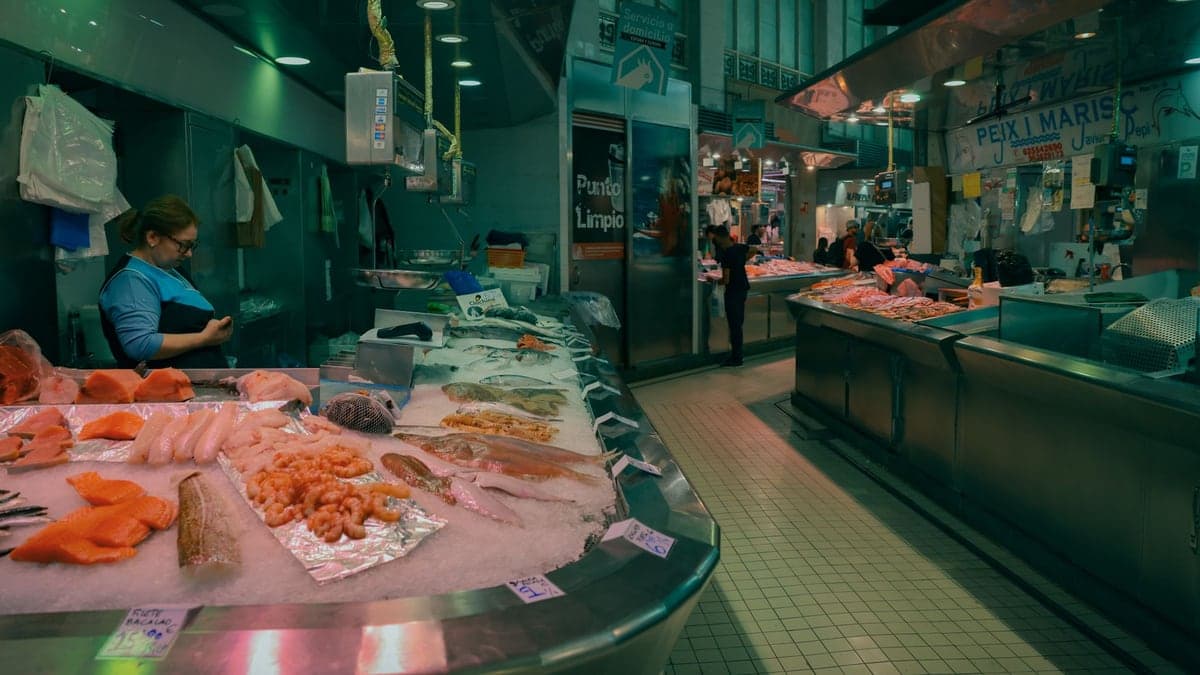
Photo by TBD Traveller on Pexels.
1. Regulatory framework
Spain’s food law operates at two levels:
- Directly applicable EU legislation, including the General Food Law Regulation, food hygiene regulations, official controls rules, labelling rules and contaminant limits.
- Spanish legislation, principally Ley 17/2011, de 5 de julio, de seguridad alimentaria y nutrición — the Food Safety and Nutrition Act — and royal decrees and other national rules that implement or supplement EU law.
The main EU acts relevant to food businesses in Spain include:
- Regulation (EC) No 178/2002 — General Food Law
- Regulation (EC) No 852/2004 — food hygiene
- Regulation (EC) No 853/2004 — specific hygiene rules for food of animal origin
- Regulation (EU) No 1169/2011 — food information to consumers
- Regulation (EU) 2017/625 — official controls
- Regulation (EC) No 2073/2005 — microbiological criteria
- Regulation (EU) 2023/915 — maximum levels for certain contaminants
Important national rules include:
- Ley 17/2011 — Food Safety and Nutrition Act
- Real Decreto 191/2011 — General Sanitary Registry of Food and Food Companies
- Real Decreto 126/2015 — information for unpackaged foods and other national labelling rules
- Real Decreto 1086/2020 — certain hygiene and inspection matters for food of animal origin
Where a Spanish rule goes beyond EU law and is permitted by EU law, it applies in addition to directly applicable EU requirements.
3. Main duties of food business operators
Food business operators are legally responsible for ensuring that food meets applicable law. Main duties include:
- Safety: Food must not be placed on the market if it is unsafe.
- Responsibility: Operators are responsible for compliance at all stages under their control.
- Traceability: Businesses must identify immediate suppliers and immediate customers — “one step forward, one step back”.
- Withdrawal and recall: Operators must withdraw or recall non-compliant food where necessary and notify competent authorities.
- Cooperation: Operators must cooperate with inspectors and provide access to premises, records and relevant information.
- Own checks: Operators must carry out appropriate checks to verify food safety and legal compliance.
These duties come mainly from Regulation (EC) No 178/2002 and are supported by Ley 17/2011 and national regulations.
4. Hygiene and HACCP
Regulation (EC) No 852/2004 requires general hygiene controls covering premises, equipment, transport, waste, water supply, personal hygiene and training, subject to limited exceptions.
Businesses other than primary producers must put in place, implement and maintain a procedure based on HACCP principles:
- identifying hazards
- determining critical control points
- setting critical limits
- monitoring
- corrective actions
- verification
- documentation
Documentation should be proportionate to the business. Small retail and catering operations may use simplified procedures where national or regional guidance allows, but the operator remains legally responsible.
Regulation (EC) No 853/2004 and related Spanish rules add requirements for relevant operations involving foods of animal origin, including slaughter, cutting, meat, dairy, fish and egg processing.
5. Registration and approval
Food businesses within the scope of the Registro General Sanitario de Empresas Alimentarias y Alimentos (RGSEAA) must register before operations begin. AESAN manages the national registry in coordination with the autonomous communities. Retail establishments serving mainly the final consumer are generally entered in the relevant autonomous-community register instead, so operators should confirm the applicable register with their regional authority.
Establishments carrying out activities with products of animal origin for which Regulation (EC) No 853/2004 requires approval must generally obtain approval from the competent authority. Certain retail and direct-supply activities may be exempt from approval but still require registration.
Applications are usually made through the competent authority of the autonomous community where the establishment is located. Operators should confirm whether their activity requires registration, approval, or both.
6. Labelling and food information
Regulation (EU) No 1169/2011 governs information for prepacked and non-prepacked food. Depending on the food and exemptions, mandatory particulars include:
- accurate food name and ingredients
- emphasised Annex II allergen information
- quantity of certain ingredients and net quantity
- date of minimum durability or use-by date
- storage conditions and conditions of use where appropriate
- the responsible operator’s name or business name and address
- origin where required, instructions where needed, and nutrition information for most prepacked foods
For non-prepacked food, allergen information must be provided. Real Decreto 126/2015 sets Spanish rules for unpackaged food and certain language and information requirements.
Mandatory food information must generally be provided in Spanish. Requirements concerning co-official languages should be checked for the relevant autonomous community and product. Nutrition and health claims are governed by Regulation (EC) No 1924/2006 and organic labelling by Regulation (EU) 2018/848.
7. Imports into Spain
Food imported from outside the EU is subject to official controls under Regulation (EU) 2017/625.
Relevant consignments, including many products of animal origin, may require:
- pre-notification in TRACES NT
- a Common Health Entry Document (CHED)
- presentation at an approved EU Border Control Post
- required health or veterinary certificates
Certain foods of non-animal origin may be subject to increased or emergency official controls. Plants and plant products covered by plant-health law may separately require phytosanitary certificates and checks.
Customs will normally not release goods subject to official food, veterinary or phytosanitary checks until clearance is complete. Importers remain responsible for EU and Spanish compliance; a supplier certificate does not transfer that responsibility. Intra-EU movements normally avoid Border Control Post entry checks, although official controls may still occur.
8. Exports from Spain
Export requirements depend on the destination and product. Businesses should check the importing country’s conditions before consigning goods.
Official export and health certificates can be issued only by the competent authority. Depending on the product, this may be a regional health or veterinary authority, MAPA or another authorised public body. Businesses should apply early because inspection or supporting documentation may be required.
Private consultants, certification bodies and directory services cannot issue official export certificates or government approvals. Directory inclusion is not official verification or approval.
9. Product-specific requirements
Businesses should check sector-specific rules, including:
- Contaminants: Regulation (EU) 2023/915
- Microbiological criteria: Regulation (EC) No 2073/2005
- Additives, enzymes and flavourings: EU rules including Regulation (EC) No 1333/2008
- Food-contact materials: Regulations (EC) No 1935/2004 and No 2023/2006
- Food supplements: Spanish compliance or notification requirements may apply
- Novel foods: Regulation (EU) 2015/2283 may require EU authorisation
- Organic products: Regulation (EU) 2018/848 and certification by a recognised control body
Requirements vary with the product, origin, destination, process and business type.
10. Practical points for food businesses
- Identify the EU and Spanish rules applying to the product and activity.
- Complete the applicable national or regional registration and obtain approval before starting where required.
- Implement hygiene procedures and proportionate HACCP-based own checks.
- Review labels, allergens and Spanish-language requirements before placing food on the market.
- For imports, check pre-notification, control-point, certificate and customs requirements early.
- For exports, confirm destination requirements and apply to the competent authority for official certificates.
- Treat voluntary private standards as separate from legal compliance.
- Do not rely on consultants or directory listings for official approvals or certificates.