
South Korea country guide
South Korea Food Safety Regulations for Food Businesses
South Korea’s food safety system is based principally on the Food Sanitation Act, the Imported Food Safety Control Special Act and the Act on Labeling and Advertising of Foods, together with the Food Code and related standards. The rules apply across the food supply chain. This guide summarises the main legal duties, authorities and official information sources.
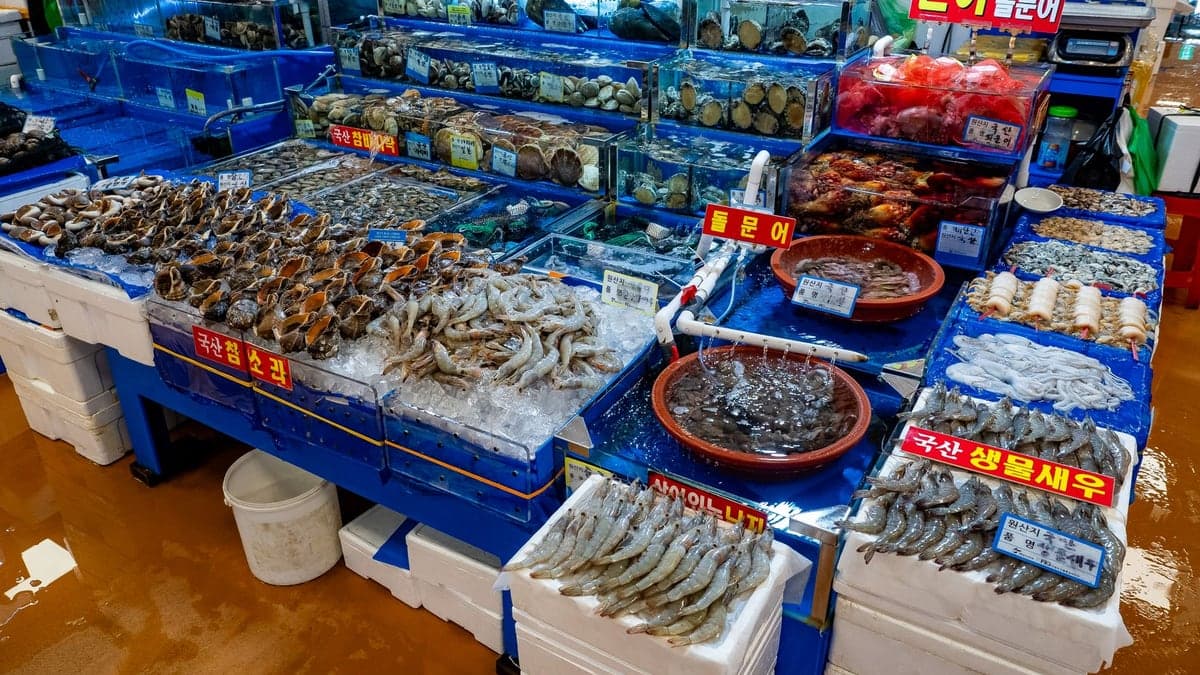
Photo by William Warby on Pexels.
1. Regulatory framework
The principal national laws are:
- Food Sanitation Act / 식품위생법 — food safety, hygiene, business licensing, registration and reporting, standards, specifications and controls.
- Imported Food Safety Control Special Act / 수입식품안전관리 특별법 — overseas food facility registration, imported-food business registration, import declaration and inspection.
- Act on Labeling and Advertising of Foods / 식품등의 표시·광고에 관한 법률 — food labelling and advertising.
- Health Functional Foods Act / 건강기능식품에 관한 법률 — separate requirements for health functional foods.
Supporting measures include the Food Code / 식품공전, Food Additives Code / 식품첨가물공전, standards for utensils, containers and packaging, and MFDS notices on labelling and HACCP. Requirements vary by product, activity and business category.
3. Main duties of food business operators
Operators are responsible for ensuring that food and their activities comply with the rules applying to them.
- Safety and standards: do not manufacture, import or sell food that is hazardous or violates applicable standards and specifications.
- Records and traceability: create and retain transaction, production or traceability records where the applicable provisions require them.
- Withdrawal and recall: stop distribution and follow applicable recall and authority-reporting duties when food presents a legally relevant hazard or non-compliance.
- Official controls: cooperate with lawful inspections, document requests and sampling.
- Self-quality inspection: businesses and products within the statutory scope must perform required self-quality inspections.
These duties are supplemented by business-category, employee health examination and hygiene-education requirements.
4. Hygiene and HACCP
Food businesses must meet the facility and hygiene standards applicable to their category, including controls for premises, equipment, cleaning, pests, water, personnel and processes.
HACCP is not universally mandatory for every food business. MFDS requires HACCP certification and controls for designated foods and business types. Voluntary certification is available outside the mandatory scope. Businesses should check the current designation, deadlines and any small-business provisions for their exact product and operation.
5. Business licensing, registration and reporting
The Food Sanitation Act distinguishes between business permission / 영업허가, business registration / 영업등록 and business reporting / 영업신고. The correct route is determined by the statutory business category; it is not accurate to treat all manufacturers as requiring the same form of licence.
Food manufacturing and processing is generally a registration category, while restaurants generally file a business report. Some categories require permission, and exemptions or different rules may apply. The responsible local government or other designated authority should be confirmed before operations begin. Separate rules govern health functional food businesses and products.
6. Labelling and food information
The Act on Labeling and Advertising of Foods and MFDS standards govern prepacked food. Depending on the product, required particulars can include the product and food-type names, ingredients, allergens, net contents, date marking, storage instructions, responsible business details, nutrition information and other prescribed warnings or statements.
Required particulars for food sold domestically are generally displayed in Korean. Imported-food labels may be applied using a Korean sticker where permitted, but the label must comply before domestic sale. Country-of-origin marking is also governed by separate origin-marking rules. Businesses must check product-specific rules rather than rely on a generic checklist.
7. Imports into South Korea
A person importing food for sale or business use generally must register the appropriate imported-food business and file an import declaration / 수입신고 for each consignment with the responsible regional MFDS office.
The relevant overseas food facility generally must be registered with MFDS before the import declaration. MFDS can use document review, field inspection, laboratory inspection or random-sampling inspection according to the consignment and compliance history. Additional exporting-government certificates apply to some products. Customs clearance follows completion of applicable MFDS and quarantine controls. The Korean importer remains responsible for compliance.
8. Exports from South Korea
Export requirements depend on the product and destination. Exporters must meet the importing country’s requirements and any Korean rules that remain applicable to the activity.
Only the competent public authority can issue an official government certificate. Depending on the certificate and product, that authority may be MFDS, APQA, MAFRA, a local government or another authorised body. Consultants and directories cannot grant government approvals; directory inclusion is not official verification.
9. Product-specific requirements
- Additives: use only additives and uses permitted by the Food Additives Code.
- Contaminants and residues: check applicable Food Code limits, including pesticide and veterinary-drug residue rules.
- Microbiology: meet applicable Food Code specifications and criteria.
- Utensils, containers and packaging: comply with Korean standards and specifications.
- Health functional foods: separate business, ingredient, product, claim and labelling controls may apply.
- Organic and genetically modified food: separate certification, assessment or labelling regimes may apply.
10. Practical points for food businesses
- Classify the product and statutory business activity before selecting a compliance route.
- Complete the correct permission, registration or report before starting.
- Confirm whether mandatory HACCP designation applies to the product and operation.
- Review current Korean labelling, advertising, allergen, nutrition and origin rules before sale.
- For imports, address overseas facility registration, importer registration, declaration, inspection, quarantine and customs requirements early.
- For exports, confirm destination rules and the authority competent to issue any required official certificate.
- Treat private certification and consulting as separate from legal approval and compliance.
